
Suriname and its surroundings
Suriname lies on South America’s Atlantic coast, with Paramaribo as its capital. It borders Guyana, Brazil and French Guiana. Coast, rivers and interior landscapes offer different environments; a single rainforest image cannot represent them all.
Sources: Overheid Suriname — land en culturele verscheidenheid
How much of Suriname is forest?
The consulted SBB/KOPI table reports 92.54% forest cover in 2023, including regeneration, compared with 92.61% in 2022 and 92.67% in 2021. These are dated measurements rather than a live figure. Reporting definitions and methods matter.
“About 93% forest” is a rounded description. Forest cover should not be confused with the geographical extent of the Amazon, so we do not claim that more than 90% of the country “consists of the Amazon”.
Central Suriname Nature Reserve
UNESCO describes approximately 1.6 million hectares of tropical forest in west-central Suriname, protecting diverse landscapes and river headwaters. Its account mentions jaguar, giant otter and tapir. The reserve has been World Heritage since 2000. This background information is not a travel offer or advice to visit sensitive areas independently.
Paramaribo’s built heritage
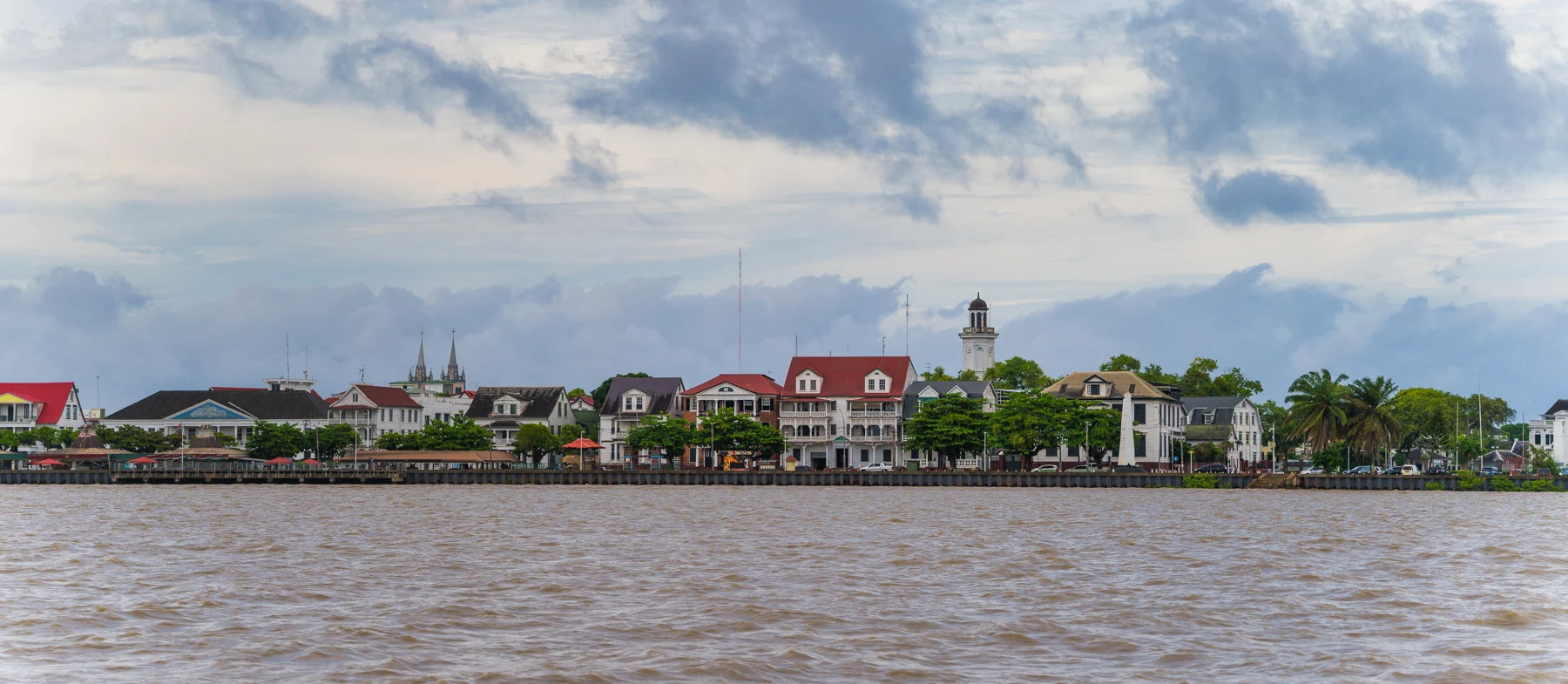
Paramaribo’s historic inner city became World Heritage in 2002. UNESCO highlights European architectural influences combined with local materials and building knowledge. Wooden buildings and the historic street layout reveal part of that history, alongside stories of labour, belief, trade, power and daily life.
Jodensavanne and Cassipora
The Jodensavanne archaeological site and Cassipora cemetery were inscribed in 2023. UNESCO connects Jewish settlement with the lives of free and enslaved people of African and Indigenous descent. This shared setting calls for attention to different histories and the relationships between them.
Sources: UNESCO — Jodensavanne en Cassipora
Listening to voices from the forest
Naturalis and OSCAM collaborated on the podcast Stemmen uit het bos, making space for voices from the Surinamese diaspora. For our editorial approach, it is a reminder to invite people with knowledge and lived connections to speak for themselves.
Sources: Naturalis — Het bos van Suriname en Stemmen uit het bos
What this means for our brand
The green colour and palm in our identity are brand choices. They are not proof of sustainable production, organic farming, local sourcing or forest protection. Such claims need verifiable company and product evidence. We keep general information about Suriname separate from what we can confirm about our own supply chain.
Written in our own words using the linked sources. Mentioning an institution does not imply partnership or endorsement. Product ingredients, origin and nutritional information require separate confirmation.
Share a question or contribution